
VR BLS Training: Accelerate Speed to Competency & Eliminate Skill Decay

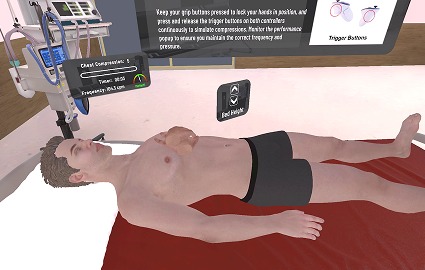
Experience BLSXR™ by VRKure: A clinician-designed medical simulation tool that delivers high-quality Basic Life Support (BLS) training. Replace subjective observation with data-driven competency tracking anytime, anywhere.

Why Hospitals and Academic Medical Centers are Choosing BLSXR™

Overcome Simulation Lab Constraints with On-Demand Training

With rising demands on hospital staffing, compliance, and patient safety, today’s medical leaders face a significant challenge: certification doesn’t always translate into real-world capability.

Enter BLSXR™. We provide efficient, convenient BLS VR training for hospital staff that delivers competency going beyond the certificate.

Accessible to everyone, our self-practice tool leverages virtual reality in healthcare to empower teams to learn, refresh, and retain skills anytime -without physical simulation labs, manikins, or scheduling complexity.  

What is BLSXR™?

A Next-Generation Virtual Reality BLS Competency Platform


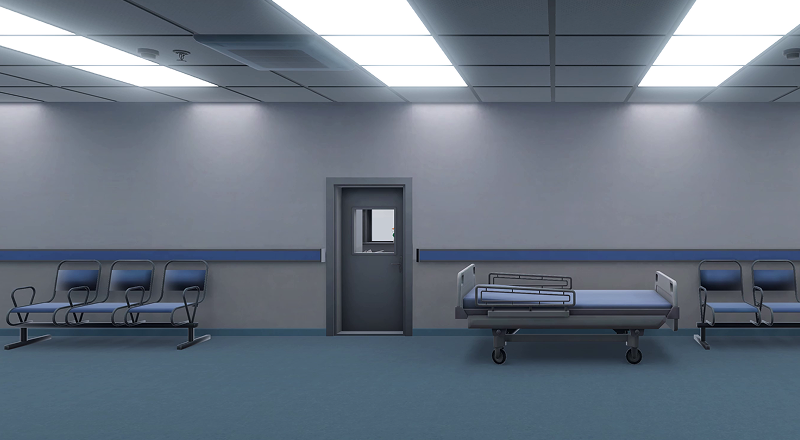
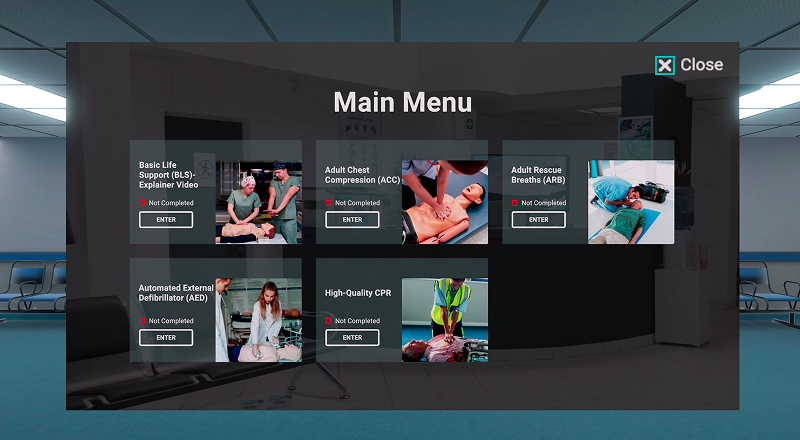
BLSXR™ is designed by VRKure to teach lifesaving skills in realistic hospital environments. Our platform focuses on competency management and proficiency between certification cycles, covering

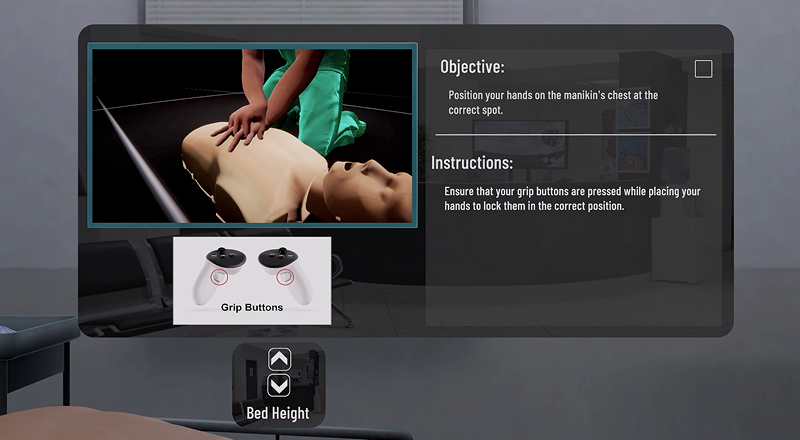
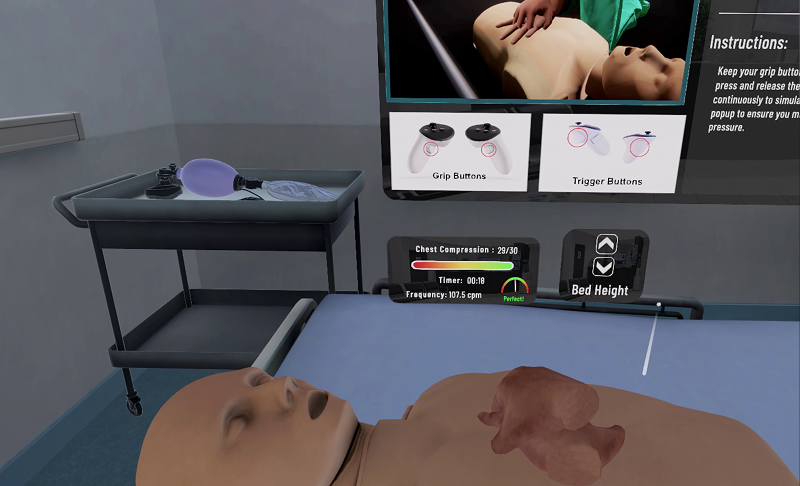
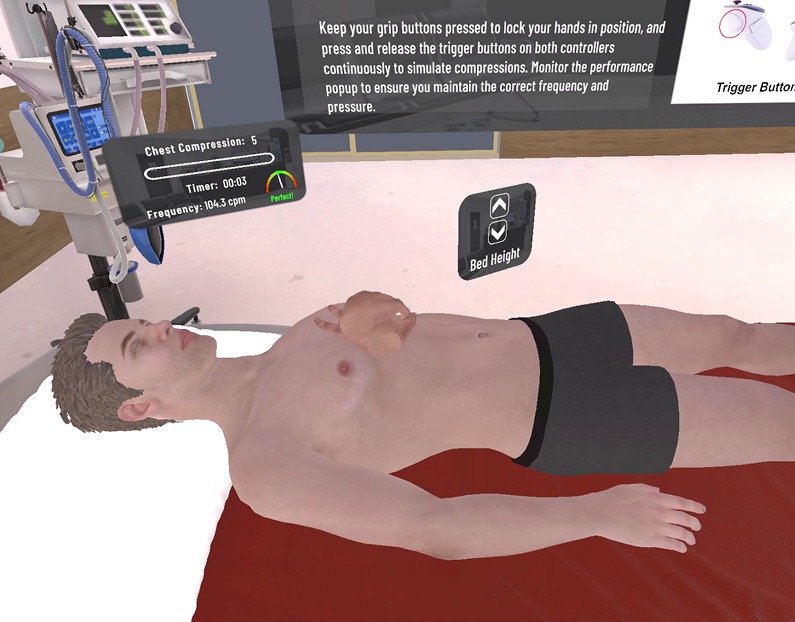
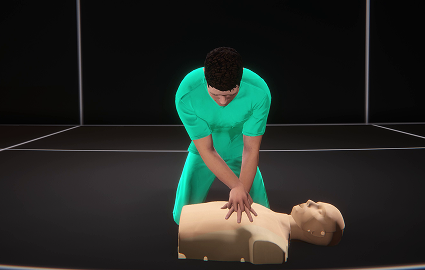
Adult Chest Compressions

Master depth and rate with realtime feedback

Adult Rescue Breaths

Practice timing and volume in a safe, virtual setting

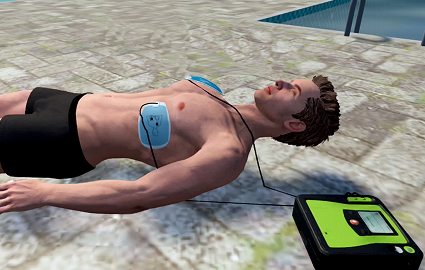
Virtual AED Training

Realistic defibrillator workflow practice

High-Quality CPR

Real-time guidance to ensure high-performance resuscitation

What is the VRKure Value Proposition?

The Challenge

“Check-the-box” Compliance

Slow Onboarding

High Costs & Scheduling

Inconsistent Instruction

The VRKure Advantage

True Competency Tracking

Move beyond simple attendance. Our system uses real-time hand-tracking to measure compression quality and workflow accuracy.

Accelerated Speed to Competency

Reduce time-to-proficiency with rapid, repeatable learning loops designed to build muscle memory faster.

On-Demand VR Training

Eliminate training bottlenecks. Deploy asynchronous modules that fit into any shift pattern without booking manikin labs.

Standardized Medical Protocols

Ensure every clinician, across every site, receives the exact same high-standard instruction.

Ideal For

Vector (1)
Hospital Executive Leadership: CMO, CNO, VP Operations
Frame 1321316030
Simulation & Clinical Education Directors
Group 1000002130
Teaching Hospitals & Residency Programs
Vector
  Innovator Physicians & Early Adopters

Operational Benefits

Realistic, High-Fidelity Environments

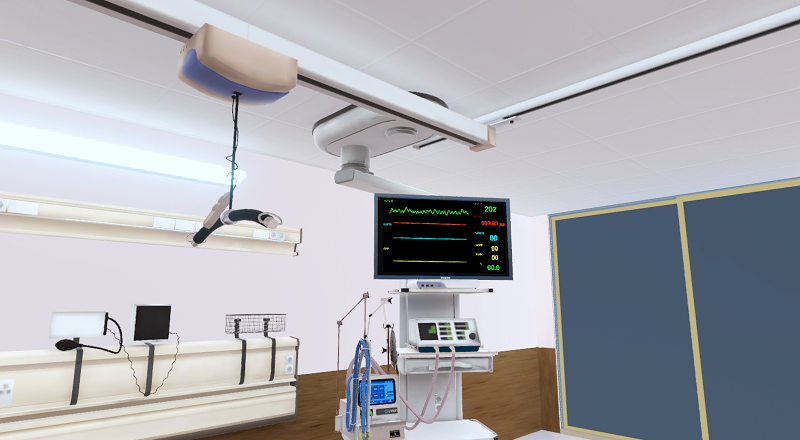
Train in the ICU, Emergency Department, or poolside to build muscle memory where it counts.

Interactive Competency & Skill Tracking

Utilizes real-time Meta Quest hand-tracking for compression quality, rescue-breath timing, and AED workflow accuracy.

Built on Medical-Grade Physiology

Powered by the Pulse Physiology Engine for accurate heart rhythms, breathing animations, and patient response

Scalable & Standardized

Deploy across multiple sites without adding staff or booking physical rooms

Platform & Deployment

Runs on Meta Quest

(standalone VR)

Distributed as

an APK

Can run on other

compatible devices

 5–10 minute modules

designed for frequent

refresher cycles

Easily deployable

across large multi-site

systems

What Our Leadership Says

Dr. Najam is recognized internationally for his pioneering work in robotic-assisted surgery and extracorporeal membrane oxygenation (ECMO) therapy. He has authored numerous peer-reviewed articles, book chapters, and abstracts, sharing his insights on topics ranging from robotic surgery to extracorporeal membrane oxygenation (ECMO). Notably, he is the author and co-editor of the award-winning and comprehensive textbook, “Robotic Surgery: Theory and Operative Technique,” a seminal work in the field.

As the Founder of VRKure, a cutting-edge healthcare technology startup, Dr. Najam is at the forefront of integrating virtual reality and augmented reality into healthcare practices, transforming how patients and healthcare providers interact and engage with medical solutions. This entrepreneurial venture underscores his commitment to leveraging cutting-edge technology to improve patient outcomes and medical training, solidifying his status as a true visionary in the medical community.

Dr. Farhad Najam
Farzad Najam, MD, FACS
Clinical Professor of Surgery, Founder, VRKure
Aninda Bose is a visionary leader with over two decades of experience shaping digital transformation and product strategy for global enterprises. As the Founder and CEO of DigiDrub, he has steered the company to the forefront of digital innovation, forging transformative collaborations that bridge technology and human impact. At DigiDrub, the development partner behind VRKure’s innovation ecosystem, Aninda leads pioneering initiatives that redefine how healthcare solutions are designed and delivered. A TEDx speaker and thought leader, he continues to inspire teams and industries alike with his forward-thinking approach and unwavering commitment to meaningful innovation.
Aninda Bose
Aninda Bose
Partner, VRKure | Founder & CEO, DigiDrub

Dr. Farhad Najam

Farzad Najam, MD, FACS

Clinical Professor of Surgery, Founder, VRKure

Dr. Najam is recognized internationally for his pioneering work in robotic-assisted surgery and extracorporeal membrane oxygenation (ECMO) therapy. He has authored numerous peer-reviewed articles, book chapters, and abstracts, sharing his insights on topics ranging from robotic surgery to extracorporeal membrane oxygenation (ECMO). Notably, he is the author and co-editor of the award-winning and comprehensive textbook, “Robotic Surgery: Theory and Operative Technique,” a seminal work in the field.

As the Founder of VRKure, a cutting-edge healthcare technology startup, Dr. Najam is at the forefront of integrating virtual reality and augmented reality into healthcare practices, transforming how patients and healthcare providers interact and engage with medical solutions. This entrepreneurial venture underscores his commitment to leveraging cutting-edge technology to improve patient outcomes and medical training, solidifying his status as a true visionary in the medical community.

Aninda Bose

Aninda Bose

Partner, VRKure
Founder & CEO, DigiDrub

Aninda Bose is a visionary leader with over two decades of experience shaping digital transformation and product strategy for global enterprises. As the Founder and CEO of DigiDrub, he has steered the company to the forefront of digital innovation, forging transformative collaborations that bridge technology and human impact. At DigiDrub, the development partner behind VRKure’s innovation ecosystem, Aninda leads pioneering initiatives that redefine how healthcare solutions are designed and delivered. A TEDx speaker and thought leader, he continues to inspire teams and industries alike with his forward-thinking approach and unwavering commitment to meaningful innovation.

Request a Consultation

Ready to bring next-generation BLS training to your team?
Our team of experts are ready to walk you through deployment, best use cases for virtual reality medical education,  and program design for your organization.

Testimonial

“BLSXR is hands down a game changer in improving, enhancing, and maintaining everyone’s competency level in BLS”

Gary RN

CNOR,RNFA

Quick Help & Information

BLSXR is a VR medical training platform tailored for clinical educators and healthcare administrators. Unlike traditional manikin-based training, it integrates immersive extended reality (XR) technology with motion tracking, providing clinicians with a dynamic and precise learning experience. The platform offers scalable training across multiple departments, enabling institutions to maintain consistent training standards while tracking real-time performance metrics. The system is designed for ease of deployment in hospital settings, requiring only XR headsets and motion-tracking sensors.

BLSXR is equipped with medical error prevention technology that provides real-time feedback on critical skills such as chest compressions, airway management, and defibrillation. The platform tracks each action with precision, ensuring clinicians meet evidence-based standards such as depth, rate, and recoil in CPR. By offering immediate corrective guidance, BLSXR reduces the likelihood of common errors, improving clinical competence and patient outcomes. Regular performance reviews also help identify skill decay, preventing errors before they impact care delivery.

BLSXR enhances training outcomes in high-risk environments by integrating medical error prevention technology that addresses key challenges in resuscitation training. The platform’s real-time error detection and correction loop ensures clinicians perform life-saving techniques accurately, reducing the likelihood of clinical mistakes during critical interventions. By continuously tracking and measuring competencies such as chest compression quality and AED use, BLSXR helps improve skill retention and ensures clinicians are always prepared for emergency situations, significantly lowering risks of errors during patient care.

Yes, BLSXR seamlessly integrates with most institutional training frameworks. The platform supports LTI and SCORM standards for compatibility with Learning Management Systems (LMS). Our team works closely with your institution to ensure smooth integration, whether your system is custom or legacy-based. This flexibility enables healthcare administrators to incorporate BLSXR’s VR medical training platform into their current workflows, enhancing training consistency without disruption to existing protocols.

BLSXR collects detailed, real-time performance data on each clinician’s actions during training. This includes metrics on compression depth, rate, recoil, ventilations, and AED protocol compliance. The platform’s medical error prevention technology continuously monitors for deviations from the standards, providing instant corrective feedback. Data is stored securely and can be used for performance reviews, targeted coaching, and identifying skill gaps. For healthcare administrators, this data provides insight into individual clinician progress and ensures compliance with institutional competency standards.