
Why We Built BLSXR: The Problem Nobody Was Solving
The Moment That Changed Everything
I have been a cardiac surgeon for over twenty-five years. Over ten thousand hearts. Ten thousand chances to get it right or watch someone not do well.
It took me a long time to develop what I can only call surgical intuition — the ability to feel when something is wrong before the monitors scream, to know which tissue will hold and which will tear, to make decisions in seconds that textbooks take chapters to explain. It is the art of the gut feeling that took decades to hone in.
There were times, after a long case, in the middle of the night, when I would close my eyes to rest for a bit, that I would receive call after call for management questions. I wished I could have cloned myself. I wished I could take everything I had absorbed through decades of 3 AM emergencies, spending endless hours in the intensive care unit, at the patients’ bedside, and somehow transfer it — not through PowerPoints, not through bedside lectures, but actually transfer it — into the minds and hands of my team. That I could transfer that level of training that led to my being methodical and intuitive at the same time. I wished everyone on the team could practice their skills, decision making, and intensity before they were confronted with an actual clinical situation.
No such system existed.
And then there were the code blues.
Picture this: An alarm blares. Within minutes, a herd of providers descends on the room — twelve, fifteen people, all wearing the same lanyard, all carrying the same laminated card that says “BLS Certified.” And yet, in that critical moment, chaos. Hesitation. People looking at each other, waiting for someone else to move first. All certified. Very few competent in basic life support, but all checked off. Some facing their first life emergency.
I watched this scene repeat itself for over three decades.
The Dirty Secret of the Laminated Card
I was a surgical and thoracic resident for eleven years. During that time, I performed hundreds of real resuscitations — actual human beings, actual cardiac arrests, actual life-and-death decisions made with my own hands. I learned from seniors and then I gave that experience to my juniors. See one, do one.
And yet the system required me to obtain a paper certificate.
So I completed the online Heartcode modules. I scheduled my in-person sign-off. The first session was canceled. The second took place in a small office I had never seen before, with an instructor whose qualifications I knew nothing about.
On the desk — not even on the floor — sat a plastic mannequin. Rigid. Unrealistic. The desk wobbled slightly when I pressed down. It all felt artificial. It had no impact on my actual skills and knowledge of basic life support.
I was “signed off” in minutes.
I received my certificate.
This is how every healthcare provider in America gets certified. A video nobody watches. A quiz you can guess on and retake until you pass. A mannequin on a desk. A stranger with a clipboard.
And then we hand them a laminated card and send them to save your mother’s life.
250,000 Reasons This Matters
Here is a number that should haunt you: 250,000.
That is how many patients die every year in the United States from preventable medical errors. Not from disease. Not from the limits of medicine. From errors.
The most advanced healthcare system in human history, and the third leading cause of death — after heart disease and cancer — is us. The people in the building. The ones with the certificates.
Let me make this concrete: Imagine a commercial airliner crashing every single day. Now imagine two.
That is what 250,000 deaths looks like.
If planes fell from the sky at this rate, there would be congressional hearings within the week. The FAA would ground every aircraft in the country. Public confidence would collapse overnight.
But in healthcare? We absorb it. We call it “the cost of doing business.” We attend the M&M conferences, we file the reports, and we move on.
The system continues.
The patients pay the price.
Why the Existing Solutions Weren’t Solutions”
The solutions we have are not solutions. They are rituals. They are theater designed to check a box so that the next box can be checked.
Videos — that nobody watches. They play in the background while people scroll through their phones and do their daily chores.
Classrooms — scheduled on days when residents, physicians, and nurses are post-call, exhausted, running on four hours of sleep and cold coffee. Everyone knows they will pass anyway. Four hours of classroom for a course which is a mandate but has no bearing on the skills and competency. But everyone is eventually checked off.
Mannequins — that rock and slide across the floor with every compression. That give no feedback on depth. That teach you nothing about the one variable that actually determines whether a heart restarts: how hard you push. That give you no stress or auditory stimuli that happen during a code.
Compression depth is not a detail. It is the detail. And the mannequins don’t measure it. We have built an entire certification infrastructure around tools that cannot tell us whether someone can actually do the job. It is a paper trail that the system mandates, and we are very proud of meeting that objective.
What “Competency” Should Actually Mean
Somewhere along the way, we confused attendance with ability.
We decided that if someone sat in a room and passed a quiz — perhaps on the second or third attempt — they were “certified.” We decided that a laminated card was the same as competence.
It is not.
Competency should mean something. It should mean: I watched you perform this skill. I measured your performance against an objective standard. The measurement was done by a system that does not get tired, does not get distracted, does not have a checkbox to complete before lunch.
Competency should be demonstrated, not assumed.
Verified, not vouched for.
Measured — agnostically, objectively, repeatedly — until there is no doubt.
Building What I Wished Existed
So I built it.
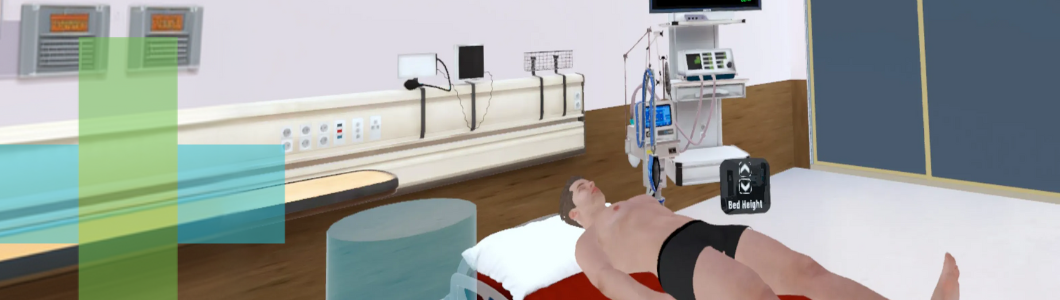
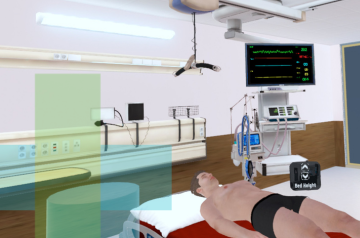
BLSXR is the system I wished existed thirty years ago. It is a virtual reality platform that places you inside a cardiac arrest — not beside a mannequin on a desk, but inside the emergency. The room. The patient. The pressure.
It introduces stress inoculation — the controlled anxiety that mimics real crisis — so that when the real moment comes, your hands already know what to do.
It tracks everything. Hand position. Compression depth. Compression rate. Timing. Sequencing. It does not ask an instructor to eyeball your performance. It measures it, down to the millimeter, down to the millisecond.
And then it does something no laminated card has ever done:
It verifies competence.
This is not certification. This is not attendance. This is biometric, objective, continuous proof that a human being can perform the skills required to save a life.
This Is Just the Beginning
VRKure, creator of BLSXR, starts with Basic Life Support because everyone needs it. Every nurse, every physician, every medical student, every first responder.
But this is not where it ends.
The same infrastructure of virtual reality BLS training modules — immersive training, biometric verification, continuous competency monitoring — can extend to ACLS. To surgical skills. To any high-stakes procedure where the difference between competence and assumption is measured in lives.
We are not building a product.
We are building a new credentialing infrastructure — one that replaces static paper certificates with continuous, biometrically-verified competency states, including predictive skill-decay modeling and proficiency-gated clinical privileges.
The laminated card had its era.
That era is over.