
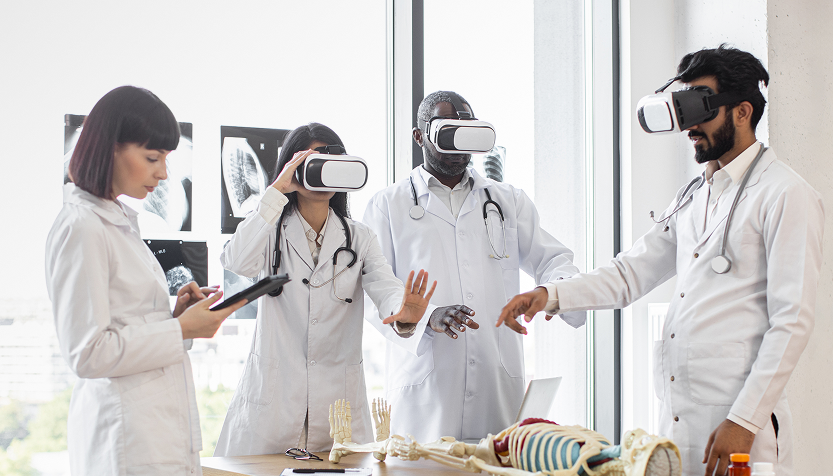
Immersive Medicine: Where Practice Becomes Performance

VR and AI-powered experiences are transforming healthcare training with measurable, adaptive learning that makes clinical readiness verifiable.

What is Immersive Medicine?

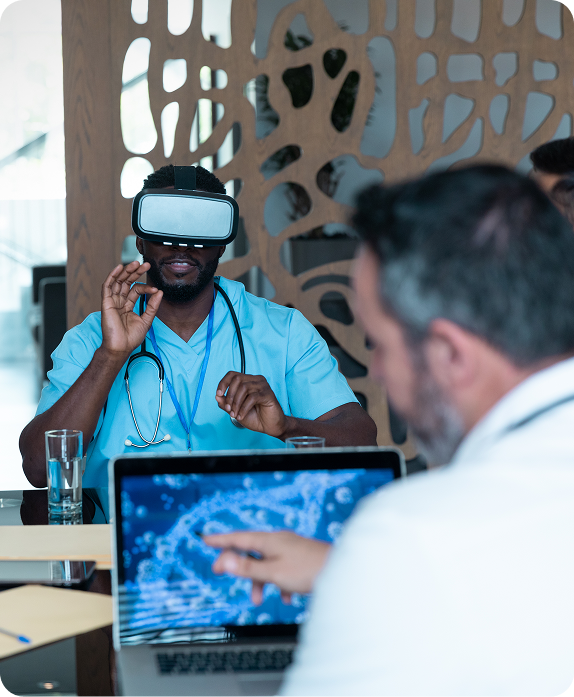
Immersive Medicine uses extended reality (XR) and AI simulation to create realistic, measurable healthcare environments. It is a new discipline built to verify competency, visualize pathology, enhance clinical learning, and support future therapeutic applications through AI-powered immersive science.

Why Healthcare Needs Immersive Medical Training

Limited lab time
restricts hands-on practice

Real-world learning can carry patient safety risks

Training experiences vary across instructors and sites

Critical skills decay without repeated reinforcement

Institutions lack objective data to verify true competency

Core Pillars of Immersive Medicine

Today

  • Virtual reality medical simulation
  • AI-guided clinical training
  • Competency-based skill tracking
  • Scalable healthcare education

The roadmap

  • Pathology visualization
  • Immersive therapeutics

Applications of Immersive Medicine

Basic Life Support training

Emergency response training

Nursing education

Surgical and procedural simulation

Hospital staff onboarding

Patient education

Remote and distributed immersive medical training

Operational Benefits

Hospitals

Nursing schools

Medical simulation
centers

Healthcare training institutions

Clinical education teams

Benefits of Immersive Medicine

Benefits of Immersive Medicine

The Future of Immersive Healthcare

Certification standards historically consolidate to a single owner. VRKure intends to be that owner — for every credentialed skill in healthcare. BLSXR™ is module one; each new module extends a clinician’s continuous, verifiable competency record across skills, scenarios, and specialties.

If you are not VRKure Verified, you are not certified.
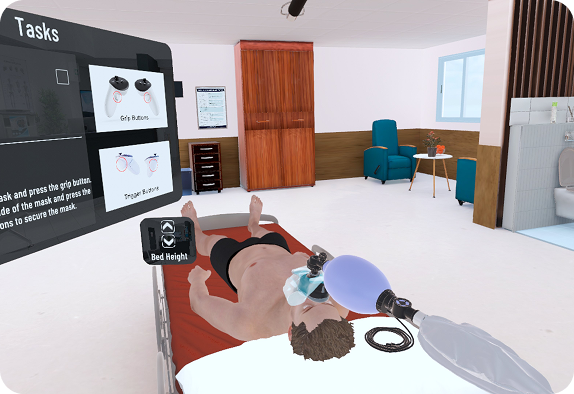
Immersive Medicine in Action: BLSXR™

BLSXR™ brings VRKure’s Immersive Medicine vision to Basic Life Support, placing learners in realistic clinical emergencies where practice becomes measurable, feedback is immediate, and competency can be verified before real patient care.