The 2 AM FaceTime Call
- 10-15 mins read
Table of Contents
What a decade of running training courses taught me about the difference between teaching and competency
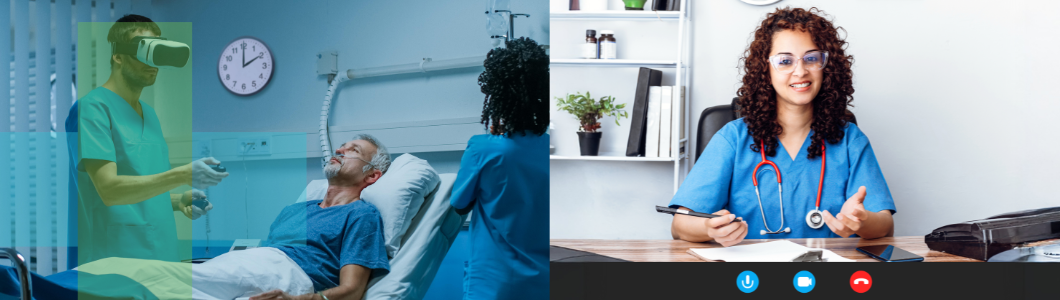
My phone would ring at 2 in the morning. Sometimes it was a nurse. Sometimes a fellow. Occasionally a colleague at another institution. They had a patient on ECMO — or about to go on ECMO — and they had a question. Sometimes it was a basic question. A question I had answered in the course we ran together six months earlier.
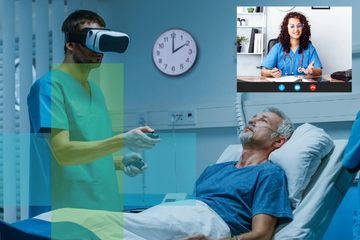
I would FaceTime them from wherever I was — from home, from a hotel, from another country. I would walk them through it. There was no other option. There was no system. There was just me, a screen, and a team trying to keep a patient alive.
For years, I told myself this was part of the job. Eventually, I realized it was evidence of a broken model.
We Built the Course Right. That Wasn’t the Problem.
In 2018 and 2019, I ran ECMO training courses as course director. We built the curriculum from scratch. We advertised through a major cardiac surgery society. We ran sessions at a dedicated ECMO training facility — a proper site, proper equipment, serious faculty. We also traveled to hospitals and ran the course on-site for their teams.
The courses were good. The participants were engaged. The simulations were realistic. By any measure of a medical education course, we were doing it well.
And then the patients came. Three months later. Six months later. And the team that had sat through two days of rigorous training would call me at 2 in the morning to ask something we had covered in the first hour.
This is not a criticism of those nurses or those fellows. This is physiology. Human memory decays. Skills decay faster. Research consistently shows that most of what is learned in a single training course is gone within 90 days — not because the learner wasn’t paying attention, but because that is how the brain works when skills are not reinforced.
We knew this in theory. But there was nothing we could do about it with the tools we had. You couldn’t run an ECMO training course every month. You couldn’t get teams back to the training site every quarter. So, the gap between training and clinical readiness just sat there, and I filled it the only way I knew how: I picked up the phone.
The Model Was Sound. The Infrastructure Was Missing.
What made that model work was alignment: a professional society with reach, a training partner with a physical site and a vested interest in competency, and a course director — me — who could bring clinical credibility to the curriculum. It was the right partnership structure for the problem we were trying to solve.
But the model had a ceiling. It could train a team. It could not sustain that team’s competency over time. Once they left the training site, they were on their own. And when a critically ill patient arrived months later, the gap became visible in the worst possible setting.
The missing piece wasn’t better lectures or more simulation hours in the course. The missing piece was a system that stayed with the team after the course ended. Something that could detect when competency had drifted. Something that could provide a refresher at 11 PM before a case the next morning, not just during a two-day seminar in a conference room in Pennsylvania.
This Is Why I Built BLSXR
I want to be precise here because I think it matters for how clinicians evaluate any platform that claims to address training gaps.
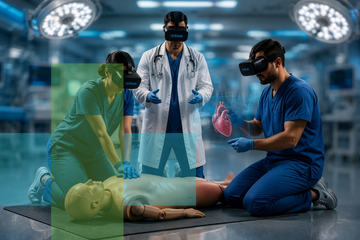
BLSXR is not a course. It is not a replacement for simulation. It is a competency verification platform — a system incorporating virtual reality BLS training modules – that tells you, continuously, whether the people responsible for your most critical patients actually retain the skills to manage them. And when they do not, it provides a pathway back to competency before a patient depends on it.
The skills decay problem I watched play out in ECMO — a high-stakes, low-volume procedure where the gap between training and clinical reality can be months — is not unique to ECMO. It is the default condition of medical training at every level, including basic life support. The only difference is that with ECMO, the stakes made the gap impossible to ignore. With BLS, we have learned to look away.
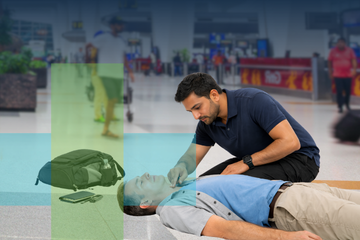
Research tells us that 75 percent of recently certified nurses fail practical BLS skills assessments within three months of certification. Three months. The certification card says they are competent. The data says otherwise.
I have stood at the bedside during enough codes to know that this gap is not abstract. And I have been on enough 2 AM FaceTime calls to know that a course — no matter how well designed — is not enough on its own.
What I Would Build Differently Today
If I were launching those ECMO training courses again, I would keep everything that worked: the professional society partnership, the dedicated training site, the hands-on curriculum, the serious faculty. That structure is right.
What I would add is a verification layer that follows every participant out the door. Not a quiz. Not a multiple-choice module. A system that tests skills in a realistic, immersive environment — and that flags when a team member’s competency has decayed below a threshold that matters clinically.
Because the course gets them ready. The verification layer keeps them ready. And the patients who arrive at 3 AM deserve a team that is ready not just in October — but in April.

Farzad Najam
Table of Contents
Recent Blogs

The Day Healthcare Becomes Like Aviation
What a Real Competency Score Should Measure
Request a Pilot Consultation
Explore how VRKure can transform your medical training.